|
Prevent arm injuries with these pro tips
High school baseball season is in full swing, and summer ball is approaching. Excitement for the sport is building.
An out is every young pitcher’s goal, but staying on the mound requires more than a strong arm — it requires a smart approach to health and longevity. To keep young athletes performing at their best while protecting their developing bodies, here are the essential best practices for the season.
- Avoid Overuse: Do not exceed 80 combined innings in a 12-month period.
- No Year-Round Pitching: Take at least 3-4 consecutive months off from throwing per year.
- Avoid Breaking Balls: Focus on learning to control a four-seam fastball and changeup; avoid curveballs and sliders, which can put too much stress on developing arms.
- Listen to the Body: Never pitch through arm pain or fatigue.
- Limit Teams: Avoid playing on multiple teams simultaneously.
- No Catching & Pitching: Do not play catcher on the same day you pitch.
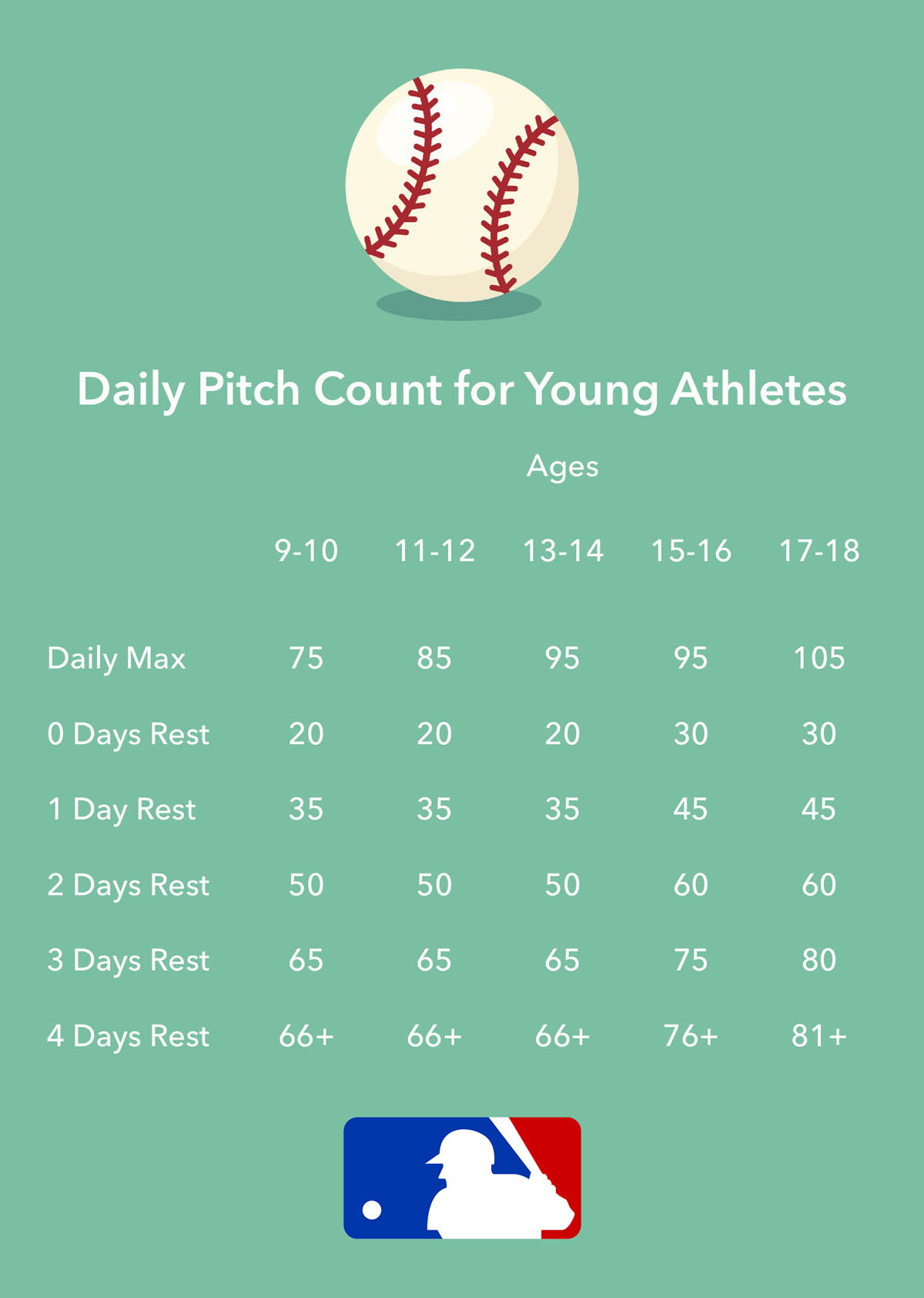
- Do Not Exceed the Daily Pitch Count: The number of pitches a young athlete should throw depends on the amount of rest they have had. See chart, below.
|
|
1. In general, is baseball a dangerous sport for young athletes?
No — baseball is generally considered one of the safer organized youth sports, especially when compared to high-contact sports like football or soccer. Overall injury rates for young players (ages 5-18) typically range from 2-8% per year, with most issues being minor (contusions, sprains, or strains from fielding, batting, or base running). Serious acute injuries or fatalities are rare.
The biggest risks are overuse injuries to the shoulder and elbow (especially for pitchers and catchers), which account for a large share of problems but are highly preventable with the highest being for catchers who also pitch. Baseball does have the highest fatality rate among sports for children ages 5-14 (about 3-4 deaths per year nationally, usually from being hit by a ball or bat, or rare commotio cordis), but these events are extremely uncommon relative to the millions of kids who play.
2. What should pitchers do to avoid injury?
The vast majority of pitcher injuries are felt to be overuse-related and tied to too much throwing without recovery. Other factors involve growth plate injuries during a child’s rapid growth period.
MLB/USA Baseball Pitch Smart and Little League guidelines recommend coaches follow age-appropriate pitch-count limits and rest requirements. For example, 9-10 year-olds max out at 75 pitches per day; 11-12 year-olds at 85; 13-14 at 95. Required rest days increase with higher pitch counts (e.g., 66+ pitches often require 4 days rest). A period of rest each year for 3-4 months from competitive pitching.
We also recommend that coaches avoid high-risk behaviors such as catching and pitching on the same team (or even the same day in most cases) and playing on multiple overlapping teams/leagues.
3. Are younger players more prone to pitching-related injuries than adults?
Yes — younger pitchers are more vulnerable to certain pitching injuries than adults, primarily because of open growth plates, weaker surrounding muscles/tendons, and higher rates of year-round specialization. Overuse injuries like “Little League elbow” (medial epicondyle issues) and “Little League shoulder” (growth-plate stress in the humerus) are unique to kids whose bones are still developing.
Data shows a sharp rise in youth UCL (ulnar collateral ligament) injuries and Tommy John surgeries over the past 15-20 years. Adolescents (15-19) now account for a large percentage of these procedures in the U.S., whereas they were once rare in anyone under 20. Youth who pitch excessively early often carry micro-damage into adulthood. Adults have closed growth plates and better-conditioned bodies, so while pros still get hurt, the physiological risks differ.
4. What would you tell a parent whose child is considering the pitching position?
Pitching can be incredibly rewarding — it builds mental toughness, precision, and leadership — but it demands the highest arm workload on the team. The key message is: Protect the arm first; everything else (velocity, wins, college scholarships) follows. Treat pitch counts, rest days, and off-seasons as sacred rules (not suggestions).
Prioritize multi-sport participation — playing other sports in the off-season reduces injury risk and builds better overall athletes.
Watch for any arm soreness, fatigue, or drop in velocity, and stop throwing immediately.
Seek coaches who emphasize mechanics, fun, and long-term development over short-term results.
Consider having the child play other positions when not pitching to give the arm a break.
General prevention for all players (not just pitchers):
- Proper warm-up/stretching, strength training (focus on legs/core), good helmets and face guards, safe sliding technique, and hydration/nutrition.
- Teach kids to communicate openly about how their body feels.
- Parents & coaches as partners: Track pitches across all teams, attend preseason meetings about safety rules, and model balance
Dr. Smith, who grew up playing baseball and then played in college, is a board-certified orthopedic surgeon at our Jackson facility. He specializes in shoulder and elbow conditions.
|